Celebrating Democracy: The Power of Voices Unite
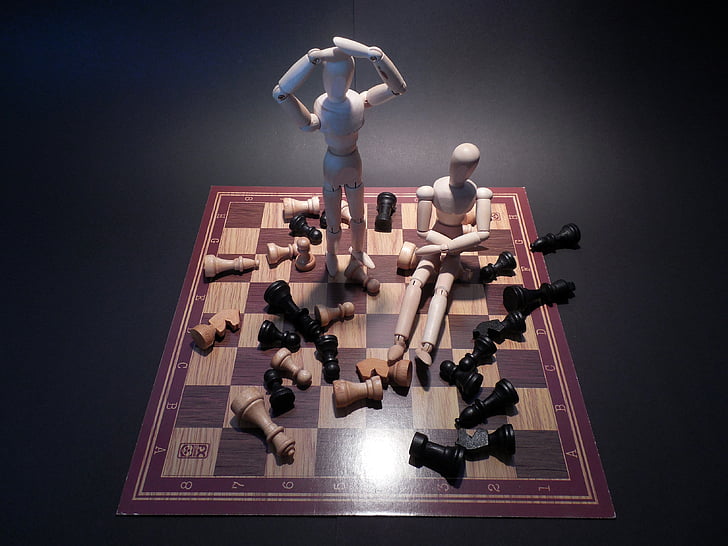
Ah, the world of chess tournaments—a place where strategy, intellect, and the occasional mad dash for an empty chair collide. It's a battleground where young chess prodigies and seasoned veterans face off in silent mental duels. But there's one battle that often goes unnoticed, one that's waged not on the 64 squares of the chessboard but in the treacherous realm of tournament seating. Join me on a rib-tickling journey through the chaos of "The Great Chess Tournament Seating Quest."
Picture this: Rows upon rows of tables, each with a chessboard and two chairs, all neatly aligned like obedient pawns. In theory, it's a peaceful sight. In reality, it's a full-blown battlefield.
I arrived at the Lamb Tail Club chess tournament in Chennai along with my child's dream of strategic brilliance and grandmaster glory, only to be confronted by a sea of occupied chairs. Parents, grandparents, and bags—oh, the bags! They took up more space than a horde of rooks.
As I scanned the room for an empty seat, I couldn't help but notice the fierce guardians of these chairs: the parents. They sat like sentinels, eyes never leaving their little Bobby Fischer or Susan Polgar, ready to fend off any would-be usurper with a polite yet firm "Sorry, this seat is taken."
It was a lesson in passive-aggressive warfare. I'd approach a table, hesitantly ask if the seat was taken, and receive a courteous nod. But just as I started to sit down, a parent would swoop in with the agility of a knight, placing a bag on the chair and declaring, "Actually, I think my child might need this chair soon."

In a world where the power of individual voices can shape nations, there's no better time to celebrate democracy than now. Democracy is not just a form of governance; it's a way of life that empowers individuals to express their views, choose their leaders, and actively participate in shaping their societies.
September 15 is celebrated as the International Day of Democracy. It was established by the United Nations General Assembly in 2007 to promote and uphold the principles of democracy. The day provides an opportunity to review the state of democracy in the world and to take action to strengthen and consolidate democracy.
The International Day of Democracy is an important opportunity to reaffirm our commitment to democracy and to take action to strengthen it. We can all do our part to promote democracy by participating in the political process, by defending human rights, and by supporting democratic institutions.
The selection of Narendra Modi as the Prime Minister of India in 2014 is often cited as an example of the power of democracy. Modi was born into a humble family and rose to prominence through his work in the Gujarat government. He was elected Prime Minister by a landslide victory, becoming the first non-Congress Prime Minister in 10 years. His victory was seen as a sign that the Indian people were tired of the old political establishment and were ready for change.
Modi's election was a significant moment in Indian history. It showed that democracy is alive and well in India and that the people have the power to choose their leaders. It also showed that a common man can rise to the highest office in the land. The election of Narendra Modi is a reminder that democracy is a powerful force for good and that it can bring about positive change.
To commemorate the essence of democracy and the importance of free expression, we're thrilled to introduce the "Let's Celebrate Democracy" contest. This is your opportunity to contribute to the ongoing dialogue about democracy, share your insights, and stand a chance to be recognized for your thoughts.